Cookies on this website

We use some cookies to make this website work. With your permission we would also like to use cookies that help us understand how the website is used and measure our advertising. You can accept or reject these, or choose which ones to allow.

Choose which cookies we can use
  • 0191 424 6336
  • [email protected]
ICT in Schools Logo
  • Our Services
    • About Us
    • Meet the Team
    • The Word in 360ยบ
    • Fab Lab @The Word: Digital Fabrication & STEM for Schools
    • Website Support
    • Professional Development
    • Loan Resources
    • Planning a visit
    • News
    • 5 minutes on Friday
    • AI – The Prompt
    • Equality, Diversity and Inclusion
  • Computing
    • Curriculum
    • AI Literacy & Guidelines
    • Policies
    • ClickView in South Tyneside
    • CAS Primary Hub
    • Digital Careers
      • Digital Careers
    • Mr R’s Escape Rooms
    • First Lego League “Bioglow” 2026/7 Season
  • Online Safety Hub
  • E-Safety
    • Online Safety Hub
    • Smoothwall Monitor
    • AI in Education
      • AI Policy
    • E-Safety
    • E-safety News
  • Community
    • The Word
    • Fab Lab
    • Literacy
    • Stronger Schools
    • Financial Support
    • Young Health Ambassadors
    • MFL
      • French
      • Spanish
    • South Tyneside Apple RTC
      • Apple RTC Home
      • Apple RTC CPD
  • CPD@Openzone
    • CPD@Openzone
    • Autumn 2026
    • Spring 2027
    • Summer 2027
    • Apple RTC CPD
ICT in Schools Logo
  • Our Services
    • About Us
    • Meet the Team
    • The Word in 360ยบ
    • Fab Lab @The Word: Digital Fabrication & STEM for Schools
    • Website Support
    • Professional Development
    • Loan Resources
    • Planning a visit
    • News
    • 5 minutes on Friday
    • AI – The Prompt
    • Equality, Diversity and Inclusion
  • Computing
    • Curriculum
    • AI Literacy & Guidelines
    • Policies
    • ClickView in South Tyneside
    • CAS Primary Hub
    • Digital Careers
      • Digital Careers
    • Mr R’s Escape Rooms
    • First Lego League “Bioglow” 2026/7 Season
  • Online Safety Hub
  • E-Safety
    • Online Safety Hub
    • Smoothwall Monitor
    • AI in Education
      • AI Policy
    • E-Safety
    • E-safety News
  • Community
    • The Word
    • Fab Lab
    • Literacy
    • Stronger Schools
    • Financial Support
    • Young Health Ambassadors
    • MFL
      • French
      • Spanish
    • South Tyneside Apple RTC
      • Apple RTC Home
      • Apple RTC CPD
  • CPD@Openzone
    • CPD@Openzone
    • Autumn 2026
    • Spring 2027
    • Summer 2027
    • Apple RTC CPD
ICT in Schools home
  • Our Services
    • About Us
    • Meet the Team
    • The Word in 360ยบ
    • Fab Lab @The Word: Digital Fabrication & STEM for Schools
    • Website Support
    • Professional Development
    • Loan Resources
    • Planning a visit
    • News
    • 5 minutes on Friday
    • AI – The Prompt
    • Equality, Diversity and Inclusion
  • Computing
    • Curriculum
    • AI Literacy & Guidelines
    • Policies
    • ClickView in South Tyneside
    • CAS Primary Hub
    • Digital Careers
      • Digital Careers
    • Mr R’s Escape Rooms
    • First Lego League “Bioglow” 2026/7 Season
  • Online Safety Hub
  • E-Safety
    • Online Safety Hub
    • Smoothwall Monitor
    • AI in Education
      • AI Policy
    • E-Safety
    • E-safety News
  • Community
    • The Word
    • Fab Lab
    • Literacy
    • Stronger Schools
    • Financial Support
    • Young Health Ambassadors
    • MFL
      • French
      • Spanish
    • South Tyneside Apple RTC
      • Apple RTC Home
      • Apple RTC CPD
  • CPD@Openzone
    • CPD@Openzone
    • Autumn 2026
    • Spring 2027
    • Summer 2027
    • Apple RTC CPD

Contact the school

Call 0191 4246334

Archive

AI Prompt Engineer

Phillippa Chippendale

Artificial Intelligence (AI) tools like ChatGPT, Midjourney, and Gemini are incredibly powerfulโ€”but they can only give brilliant answers if humans ask them the precise questions. Enter the AI Prompt Engineer.

๐Ÿ’ฌ The Role: AI Prompt Engineer

Prompt Engineers are the expert translators between human language and machine logic.

They train and guide AI models by:

  • Writing precise instructions, contexts, and constraints.
  • Testing how AI responds to different tones and sentence structures.
  • Generating the exact code, text, or art a company needs efficiently.

๐Ÿง  School Links: How It Connects to Your Lessons

  • English Language: Absolute precision with vocabulary, sentence structure, punctuation, and grammar is critical here. A single changed word can completely alter an AI’s output.
  • Computing: Understanding algorithmic thinking, conditional logic, and how machine learning models process human language.

๐ŸŽ“ Qualifications & Pathways

  • Secondary/College: Focus on achieving excellent grades in GCSE English and Computer Science. For post-16, A-Levels in English Literature/Language, Computer Science, or Philosophy are highly valued.
  • Higher Ed / Apprenticeships: This is such a brand-new career path that standard degrees are rare! Degrees in Linguistics (the scientific study of language), Computer Science, or Philosophy and Logic provide the ultimate foundation.

๐ŸŒŸ Primary School Spotlight: The “Robot Teacher” Game

You can practice the core logic of prompt engineering right now without a computer.

  • The Challenge: Play the “Robot Teacher” game as a class. You must give your teacher instructions to make a jam sandwich, but you must be incredibly specific.
  • The Catch: If you say “put the jam on the bread,” but forgot to tell the robot to “open the jar first,” your instruction fails! Learn how to be precise.

๐Ÿš€ Secondary School Spotlight: Iterative Prompting

The best prompt engineers use trial and error to get the perfect results from AI systems.

  • Next Steps: Using a safe, school-approved AI tool, practice refining your language.
  • The Project: Write a basic prompt asking for information. Look at the result, then rewrite your prompt with added constraints (e.g., tone, target audience, structural constraints) to make the output twice as useful.

๐Ÿ Teachers’ Corner

This career is a phenomenal example of how traditional humanities skills drive cutting-edge technology fields.

Classroom Discussion Prompt:

“Prompt engineering proves that being able to write clearly, structure arguments, and use exact vocabulary is a superpower in the technology age. How does strong literacy help us control advanced machines?”
Digital Careers, Front Page News, News

The Cloud Architect

Phillippa Chippendale

Where do your photos, game saves, and videos actually go when you save them to “the cloud”? They don’t float in the sky! They travel to massive, high-tech data centers managed by Cloud Architects.

๐ŸŒ The Role: Cloud Architect

Cloud Architects are the engineers behind the invisible internet infrastructure.

They build massive systems that allow businesses to:

  • Store petabytes of data securely over the internet.
  • Run huge applications smoothly without needing powerful local computers.
  • Operate reliably and cheaply so services like Netflix or Roblox never go offline.

๐Ÿง  School Links: How It Connects to Your Lessons

  • Computing: Learning how physical networks, servers, clients, and the global internet operate.
  • Geography: Thinking about the global scale of data centers, infrastructure placement, and the immense energy and cooling resources they require.

๐ŸŽ“ Qualifications & Pathways

  • Secondary/College: Prioritize GCSE Computer Science and Maths. Follow this up with A-Levels in Computer Science, ICT, or Physics.
  • Higher Ed / Apprenticeships: Pursuing a Computer Science degree or higher apprenticeship is standard. Crucially, you will need professional industry certifications from major cloud providers like AWS (Amazon Web Services), Microsoft Azure, or Google Cloud.

๐ŸŒŸ Primary School Spotlight: Map the Journey

“The cloud” is completely physical. Let’s trace how it actually works.

  • The Challenge: Draw a diagram showing the physical journey a photo takes.
  • The Route: Trace it from your school tablet, through the classroom Wi-Fi router, down wires into the street, across the global internet, and right into a giant server building located miles away.

๐Ÿš€ Secondary School Spotlight: Extreme Infrastructure

Data centers require massive amounts of electricity and cooling to keep thousands of running computers from overheating.

  • Next Steps: Research what modern data centers look like inside.
  • Did You Know? Look up why companies like Microsoft have experimented with deploying experimental data centers completely underwater in the ocean!

๐Ÿ Teachers’ Corner

Demystify the abstract concept of “the cloud” by focusing heavily on hardware reality.

Classroom Discussion Prompt:

Use this post to talk about the physical reality of the internetโ€”the massive fiber-optic cables running across the ocean floors and the massive server warehouses keeping the digital world alive.

Digital Careers, Front Page News, News

The UX/UI Designer

Phillippa Chippendale

Have you ever used an app that was so confusing you wanted to delete it straight away? Or one that was so smooth and beautiful you absolutely loved using it? The difference comes down to the work of a UX/UI Designer.

๐Ÿ’ป The Role: UX/UI Designer

UX/UI designers look at the psychology and style behind your favorite digital spaces.

They are split into two core disciplines:

  • UX (User Experience) Designers: Make sure technology is easy, logical, and enjoyable to use by researching exactly how humans behave and navigate.
  • UI (User Interface) Designers: Focus entirely on the look and feelโ€”selecting the perfect buttons, colors, fonts, and visual layouts.

๐Ÿง  School Links: How It Connects to Your Lessons

  • Art & Design: Understanding color theory, composition, visual balance, and visual communication.
  • English & Media Studies: Learning how to understand an audience and communicate ideas clearly to them.

๐ŸŽ“ Qualifications & Pathways

  • Secondary/College: Focus on GCSEs in Art, Graphic Design, or Media Studies. For post-16, look at A-Levels in Art/Design, Graphic Communication, or a T-Level in Digital Business Services.
  • Higher Ed / Apprenticeships: Degrees in Graphic Design, Interaction Design, or Psychology are great steps. In this creative field, building a strong portfolio (a collection of your design work) is often even more important than a formal degree.

๐ŸŒŸ Primary School Spotlight: Redesign Challenge!

You can practice app layout and design logic now.

  • The Challenge: Look at your favorite school website or digital app. Draw a picture of how you would redesign the homepage.
  • Top Tip: Make it look cooler and much easier for a five-year-old to navigate unaided. What buttons would you make bigger?

๐Ÿš€ Secondary School Spotlight: Wireframing Pro

If you want a head start in digital design, try your hand at real software tools used by multinational tech companies.

  • Next Steps: Download a free-tier tool like Figma or Adobe XD.
  • The Project: Try designing three connected screens for a hypothetical mobile app that helps people track their pet’s health and feeding schedules.

๐Ÿ Teachers’ Corner

This topic provides an excellent cross-curricular bridge between art, media, and technology.

Classroom Activity Idea:

Have your students critique the usability of common everyday items (like a physical school planner or a microwave control interface). Discuss what makes them annoying before tasking students to sketch out a cleaner, digital-screen version.

Digital Careers, Front Page News, News

The Data Scientist

Phillippa Chippendale

How does Netflix know exactly what show you want to watch next? How do supermarkets know which foods to stock up on right before a big winter storm? They use the power of data, guided by Data Scientists.

๐Ÿ“ˆ The Role: Data Scientist

Data Scientists are the ultimate pattern finders. They take massive amounts of messy information (data) and use computers to reveal hidden trends.

They act as digital translators who:

  • Collect and clean huge sets of numbers, facts, and user behaviors.
  • Write programs to spot trends and make predictions.
  • Turn numbers into stories that help businesses and governments make smart choices.

๐Ÿง  School Links: How It Connects to Your Lessons

  • Maths: Statistics, graphs, percentages, and averages are a Data Scientist’s absolute bread and butter.
  • Geography: Analyzing climate trends, weather patterns, or population data to map out changes over time.

๐ŸŽ“ Qualifications & Pathways

  • Secondary/College: Strong grades in GCSE Maths are essential. For post-16, focus on A-Levels in Maths, Further Maths, Statistics, or Computer Science.
  • Higher Ed / Apprenticeships: Most Data Scientists hold a degree in Mathematics, Data Science, or Statistics. However, Degree Apprenticeships in Data Analytics are a fast-growing route where you work for a company while earning your university degree.

๐ŸŒŸ Primary School Spotlight: Classroom Data Gathering

You don’t need supercomputers to start doing data scienceโ€”you can start right in your classroom!

  • The Challenge: Gather some data today! Count everyone’s favorite fruits or school lunches, and create a clear bar chart to show the most popular choice.
  • The Result: Look at your chart. What pattern does it show? You’ve just completed your first data science project!

๐Ÿš€ Secondary School Spotlight: Real-World Digital Tools

If you want to get a head start in data science, you need to look beyond standard spreadsheets.

  • Key Skills to Build: Learn the basics of Python, which is the most popular programming language for data analytics.
  • What to Look Into: Check out beginner tutorials for Python libraries like Pandas (used for sorting data) and Matplotlib (used for turning data into amazing visual graphs).

๐Ÿ Teachers’ Corner

This topic is an excellent way to combine a Maths and Computing lesson into one interactive activity.

Classroom Activity Idea: Have your students collect data on playground activities or school transport methods, and use digital tools (like Excel or Google Sheets) to filter, analyze, and graph the results.

Digital Careers, Front Page News, News

Cyber Security

Phillippa Chippendale

Ever wondered how banks, hospitals, and even your favorite online games keep their secrets safe from hackers? Meet the Cyber Security Analystโ€”the digital detectives of the modern world.

๐Ÿ›ก๏ธ The Role: Cyber Security Analyst

Cyber Security Analysts protect computers, networks, and data from cybercriminals.

They are the digital line of defence who:

  • Look for weaknesses in computer systems before hackers find them.
  • Build digital walls (firewalls) to block cyber attacks.
  • Investigate the evidence to find out how a breach happened if someone manages to break through.

๐Ÿง  School Links: How It Connects to Your Lessons

  • Computing: Understanding how networks, routers, and the internet function is the foundation of all security.
  • PSHE / Citizenship: Learning about digital citizenship, online safety, ethics, and copyright law.

๐ŸŽ“ Qualifications & Pathways

  • Secondary/College: Aim for strong GCSEs in Computer Science and Maths. From there, you can look at A-Levels in Computer Science/Maths, or a T-Level in Digital Support Services.
  • Higher Ed / Apprenticeships: A degree in Cyber Security or Computer Science is common. However, Cyber Security Higher Apprenticeships (Level 4 or 6) are incredibly popular right now, allowing you to earn a salary while you learn on the job. Look out for entry-level professional certifications like CompTIA Security+.

๐ŸŒŸ Primary School Spotlight: Be a Password Champion!

You can practice good cybersecurity habits now.

  • The Challenge: Create a guide or a poster for your classmates on how to make an “unbreakable” password.
  • Top Tip: Teach them the Three Random Words rule! Combining three completely unrelated, memorable words (plus numbers and symbols) makes passwords incredibly difficult for hackers to crack.

๐Ÿš€ Secondary School Spotlight: Ethical Hacking

Did you know some companies actually pay people to legally break into their systems? This is called Ethical Hacking (or “White Hat” hacking).

  • Next Steps: Research how ethical hackers find security flaws to fix them before the bad guys exploit them. Look up free introductory courses on platforms like TryHackMe or CyberStart America/UK to test your skills safely.

๐Ÿ Teachers’ Corner

This post is perfect for introducing a lesson on e-safety or network security.

Classroom Discussion Prompt: “What is the difference between a ‘Black Hat’ hacker (malicious) and a ‘White Hat’ hacker (ethical)? Why do companies need to hire people who know how to hack?”

Digital Careers, Front Page News, News

๐Ÿš€Digital Careers

Phillippa Chippendale

Welcome to the first post in our new Digital Careers & STEM spotlight series! Throughout this term, weโ€™ll be exploring the incredible, fast-moving world of technology and the brilliant careers waiting for you when you grow up.

Whether you are a student wondering how your favorite apps are made, or a teacher looking for real-world STEM inspiration for the classroom, this series is for you.

To kick things off, we are diving into an industry almost everyone knows and loves: Video Games!

๐ŸŽฎ The Role: Video Games Developer

When you play a game like Minecraft, Roblox, or EA Sports FC, it feels like magic. But behind that magic is a team of brilliant STEM professionals called Games Developers.

Game developers are architects and builders of the digital world. They write the code that tells characters how to move, design the physics of how a ball bounces, and solve complex problems to make sure the game runs smoothly without crashing.

๐Ÿง  How does this link to what you learn in school?

 Computing & ICT: Every time you practice block coding (like Scratch) or text-based coding (like Python) in school, you are learning the exact fundamental logic games developers use every day.

 Maths: Games rely heavily on coordinates, angles, and geometry to place objects and move characters around a screen.

 Art & Design: Creating the look of a game, from the main character to the background scenery, requires incredible digital art skills.

๐ŸŒŸ Primary School Spotlight: Try it yourself!

You don’t have to wait until you are an adult to start making games. You can practice critical thinking and sequencing now.

 The Challenge: Try creating a simple “Catch” game in Scratch where a character has to catch falling objects to score points.

 Top Tip: Think about the algorithm (the step-by-step instructions) your game needs. What if the object touches the character?

๐Ÿš€ Secondary School Spotlight: Next Steps

If you’re in secondary school and thinking about your future GCSEs, BTECs, or future career paths, games development is a massive industry in the UK (with huge hubs in places like London, Dundee, and Leamington Spa!).

 Key Skills to Build: Logic, teamwork, resilience (because code will break, and finding the bugs is half the job!).

 What to look into: Check out free engines like Unity or Unreal Engine, which have fantastic free tutorials for beginners.

Teachers’ Corner ๐Ÿ

Want to bring this into your lesson this week? Use this post as a 5-minute morning starter discussion. Ask your students: “If you could design any video game to help people learn a school subject, what would it be and how would it work?”

Digital Careers, Front Page News, News

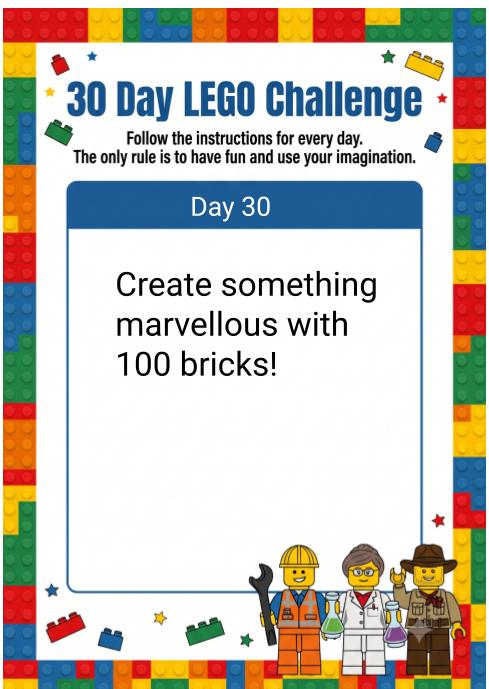
LEGO Challenge: Day 30

Phillippa Chippendale

Front Page News, Lego, News

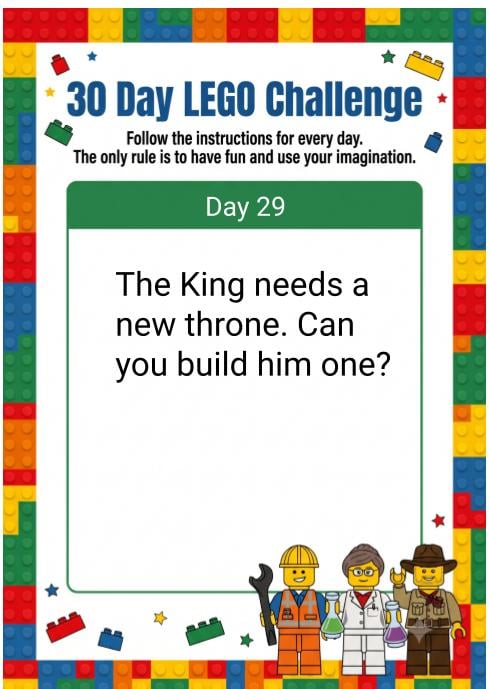
LEGO Challenge: Day 29

Phillippa Chippendale

Front Page News, Lego, News

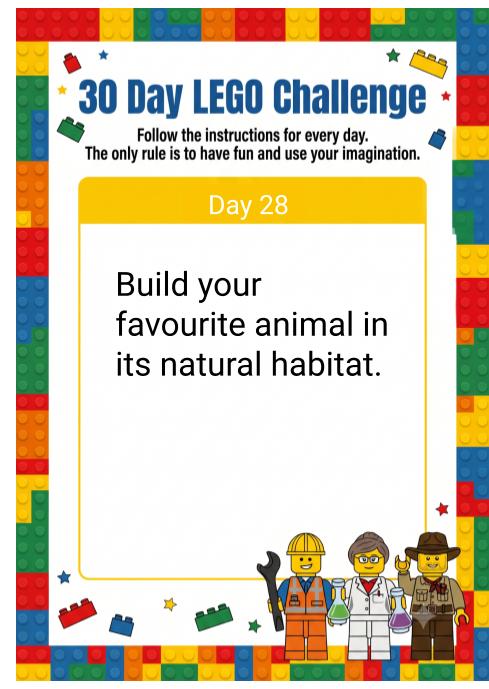
LEGO Challenge: Day 28

Phillippa Chippendale

Front Page News, Lego, News

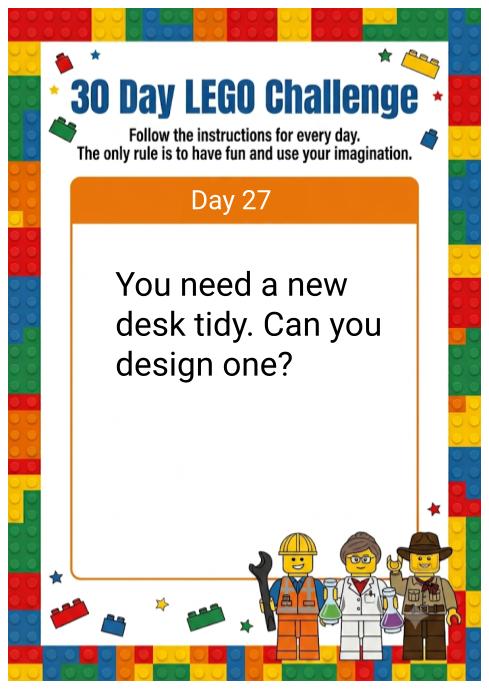
LEGO Challenge: Day 27

Phillippa Chippendale

Front Page News, Lego, News

Post navigation

← Older posts

Address

ICT in Schools Team

OpenZone@The Word

45 Market Place

South Shields

NE33 1JF

Contact Us

ICT In Schools
Open Zone @ The Word
45 Market Place
South Shields
NE33 1JF

0191 424 6336

[email protected]

Website Accessibility Statement | South Tyneside Apple RTC Twitter Feed

School website powered by Realsmart Logo